Sanger sequencing analysis
Stranded takes Sanger data from raw AB1 trace to finished contig. Inspect chromatograms, merge read pairs, and assemble reads while the traces stay attached, so you can check every base along the way.
View and edit AB1 chromatograms
Import .ab1 files and view traces with per-base quality scores. Trim ends and review ambiguous calls. Edited traces can be exported as AB1 again.

Merge forward and reverse reads
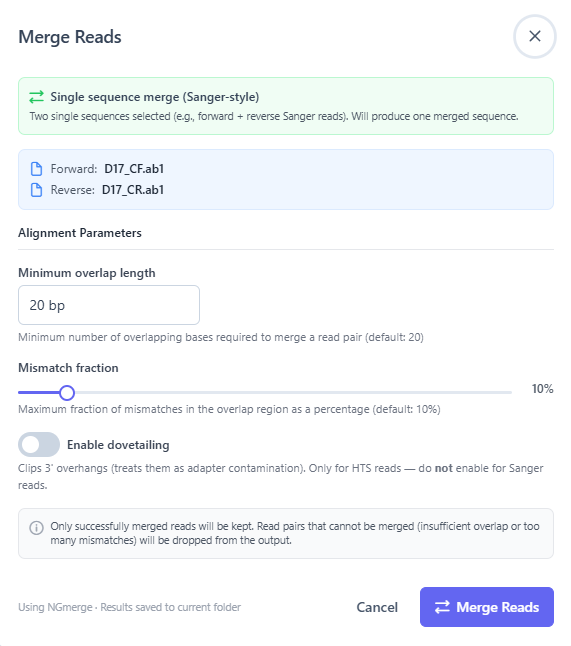
Merge overlapping forward and reverse reads into a single sequence.
Assemble Sanger reads into contigs
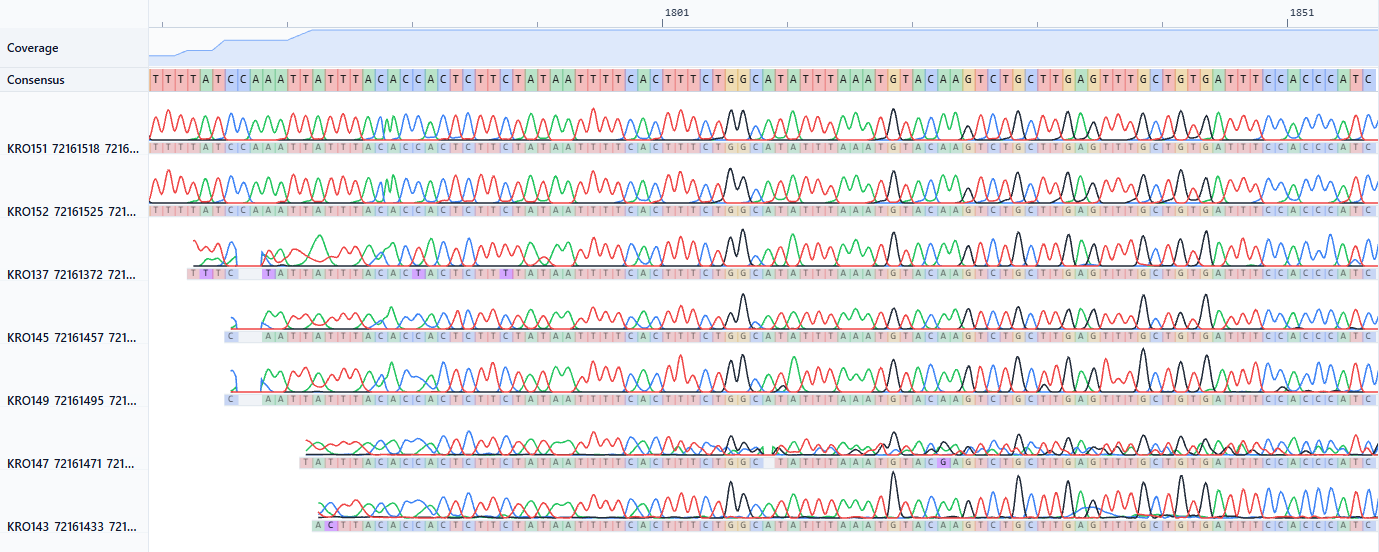
Assemble small Sanger and mixed datasets with Birra, our in-house trace-aware assembler, or with MIRA. Chromatograms and annotations carry over into alignments and assemblies, so you never lose the link back to the original read and its evidence.
// no local compute
We run the analyses for you
Workflows run on our servers, not on your computer. Pick your input, adjust a few options that come with sensible defaults, and click Run. The result is saved to your project when it is ready, together with the workflow and parameters that produced it. There is nothing to install, and you don't need a powerful machine.
// faq
Which Sanger file formats does Stranded support?
Stranded imports and exports AB1 trace files, and can export sequences as FASTA, FASTQ or GenBank.
Which assembler should I use for Sanger reads?
We recommend using our in-house assembler "Birra" for Sanger reads, it works great for low coverage datasets and usually creates longer contigs in these cases. For larger or more complex datasets, you may consider using MIRA.