NGS read processing, mapping and assembly
Stranded covers common steps for short-read and long-read data: quality control, trimming, read merging, mapping and de novo assembly.
Quality control and trimming
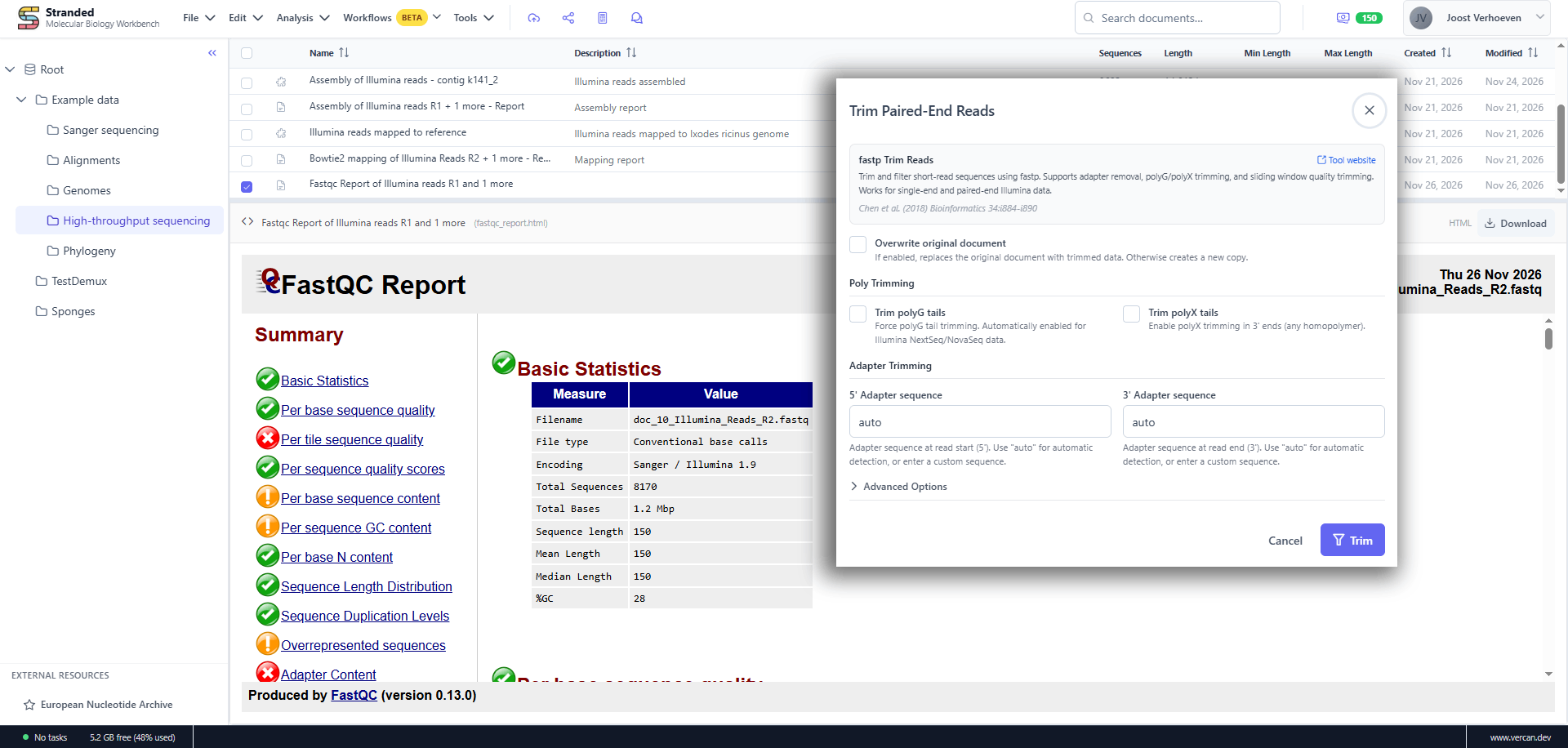
Check read quality with FastQC for short reads and NanoPlot for long reads. Trim adapters and low-quality bases with fastp or fastplong, and merge overlapping read pairs with NGmerge.
Map reads to a reference
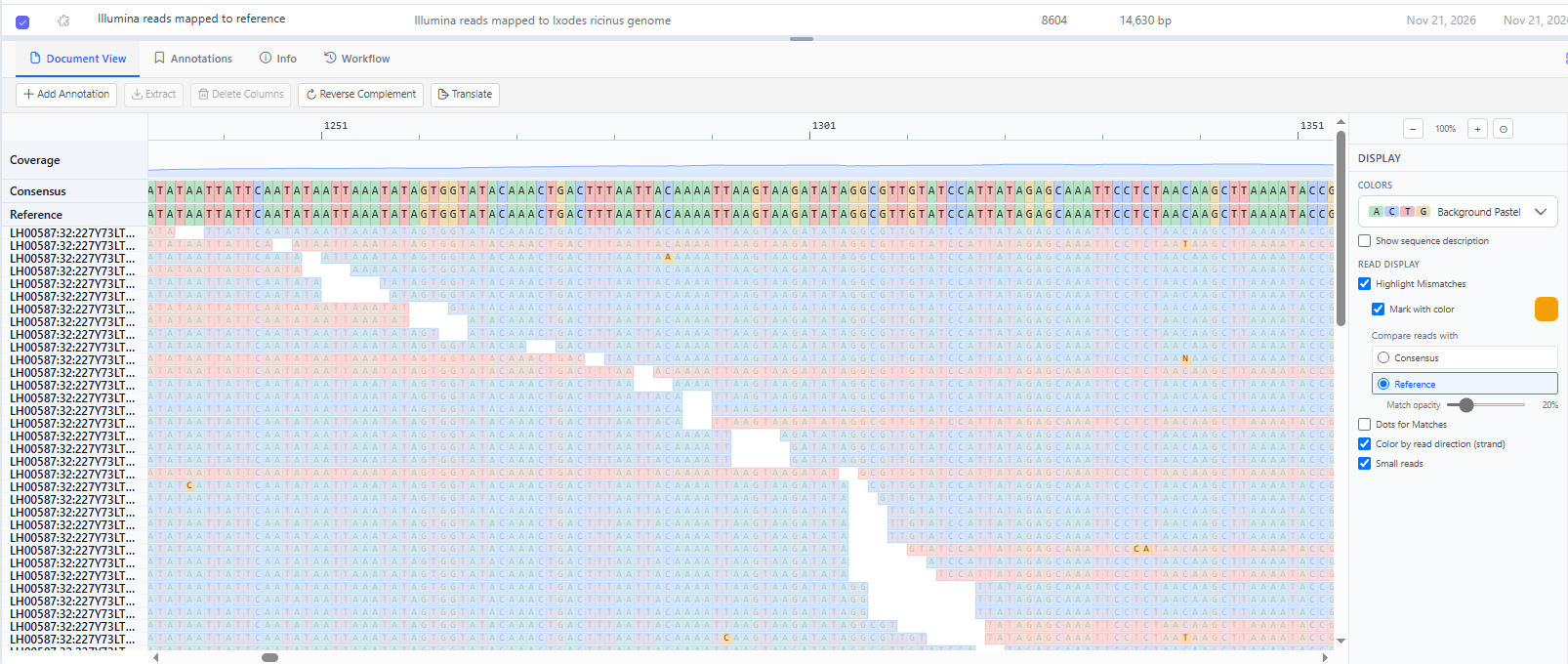
Map Illumina or Ion Torrent reads with Bowtie2, and Nanopore or PacBio reads with minimap2. Inspect coverage and individual reads in the pileup view. Existing SAM and BAM files can be imported directly.
De novo assembly
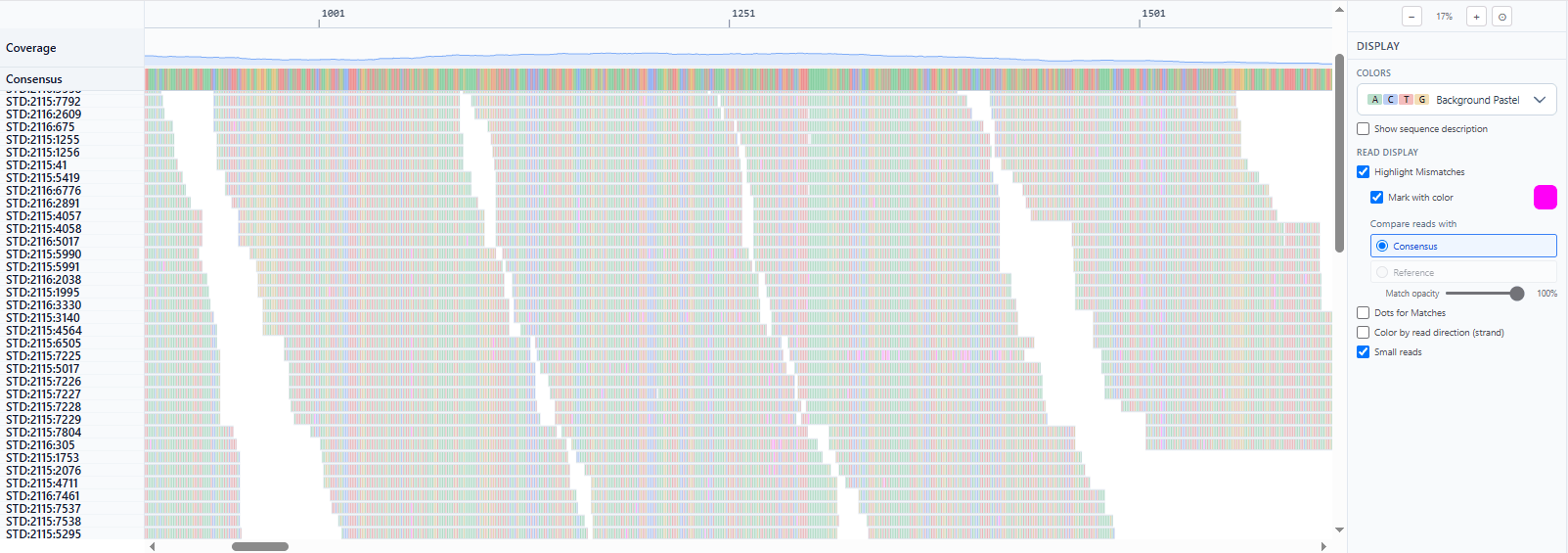
Assemble short reads into contigs with MEGAHIT, and accurate long reads, including metagenomes, with MetaMDBG.
// no local compute
We run the analyses for you
Workflows run on our servers, not on your computer. Pick your input, adjust a few options that come with sensible defaults, and click Run. The result is saved to your project when it is ready, together with the workflow and parameters that produced it. There is nothing to install, and you don't need a powerful machine.
// faq
Which sequencing platforms are supported?
Short-read workflows are intended for Illumina and Ion Torrent data, and long-read workflows for Nanopore and PacBio data.
How large can my read files be?
Files are uploaded in chunks, so large FASTQ files are supported. However, if you are a power user, working with very large datasets, you should be aware of storage limits, and consider if Stranded is the right platform for your needs.