Advanced workflows: demultiplexing, amplicon analysis and codon usage
Some analyses work on a whole experiment rather than a single file. In Stranded you describe your samples once in an experiment design, and multi-sample workflows such as amplicon analysis, demultiplexing and codon usage run on it, each producing a report you can share.
Experiment designs
Group samples, read files and sequence groups in an experiment design. Multi-sample workflows run on the experiment, so you don't have to start a separate job for every file.
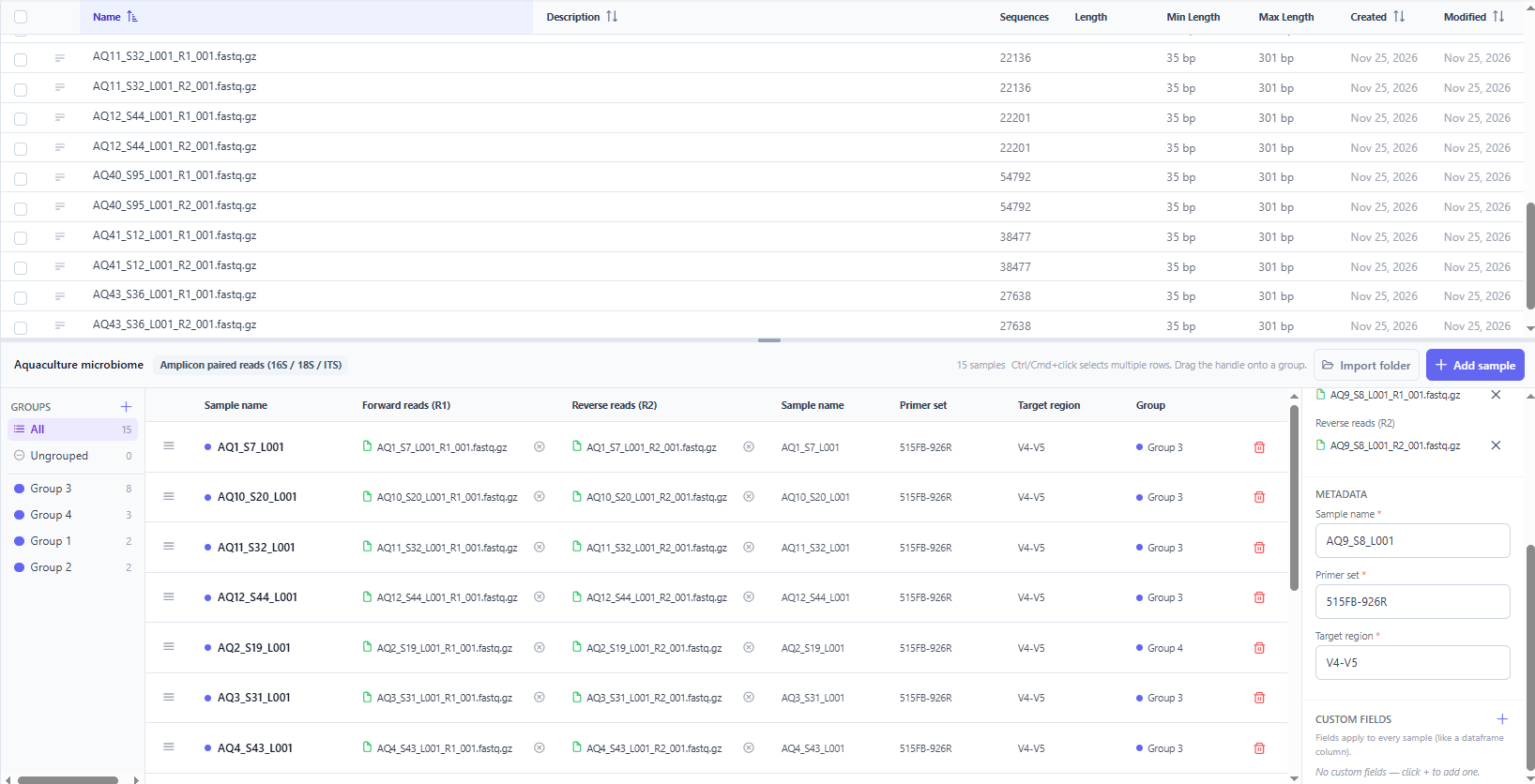
16S, 18S and ITS amplicon analysis
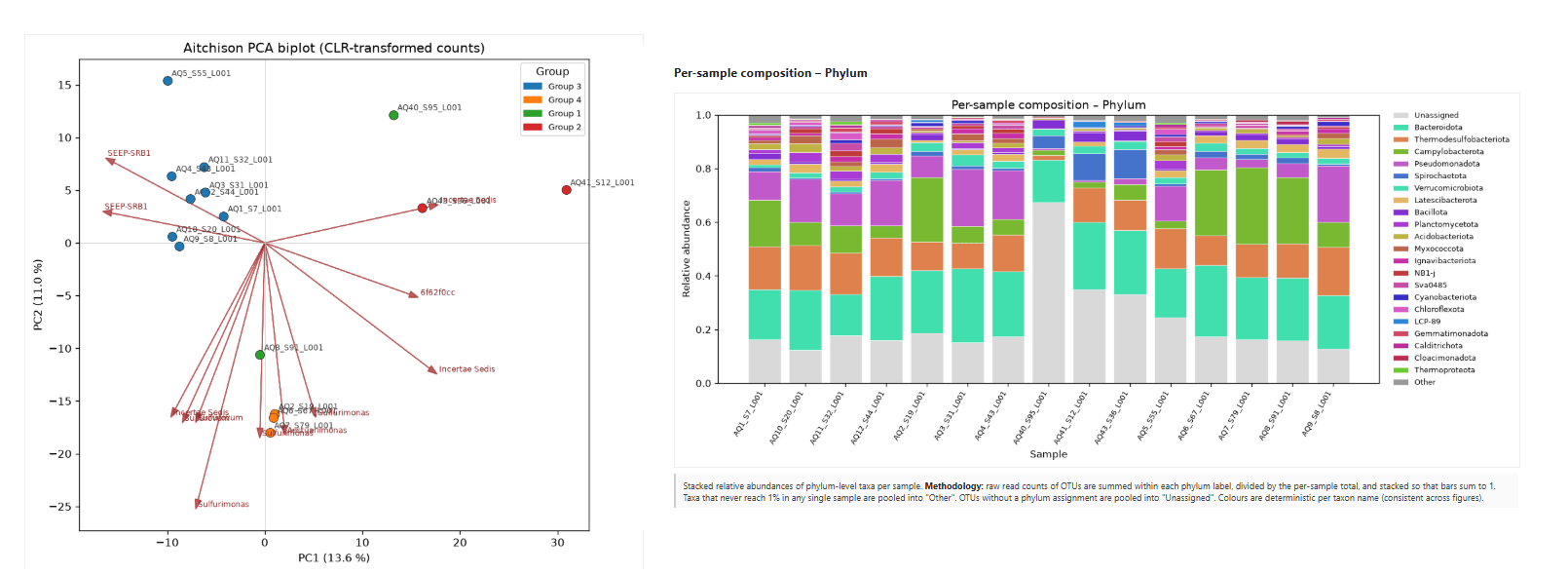
Go from paired-end amplicon reads to a community report in one run. Read pairs are merged, dereplicated and chimera-checked, OTUs are clustered, and taxonomy is assigned against SILVA (16S, 18S) or UNITE (ITS). The report includes, among other things: alpha diversity, composition per rank by sample and by group, a PCA biplot and a distance heatmap, alongside an OTU table and representative sequences.
Demultiplexing by inline primers
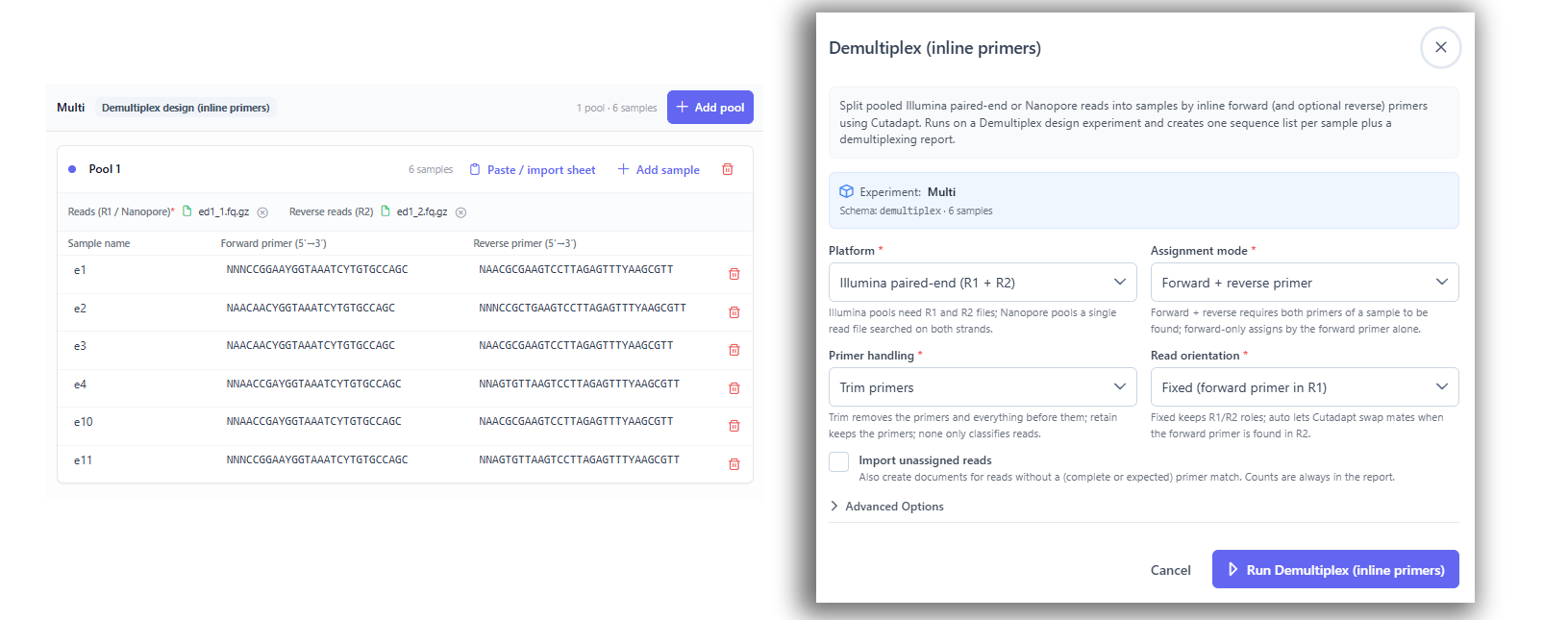
Split pooled reads into samples by their inline primers with Cutadapt. Works with Illumina paired-end pools and Nanopore reads. Each sample gets its own documents in a folder per pool, with a demultiplexing report.
Codon usage and composition
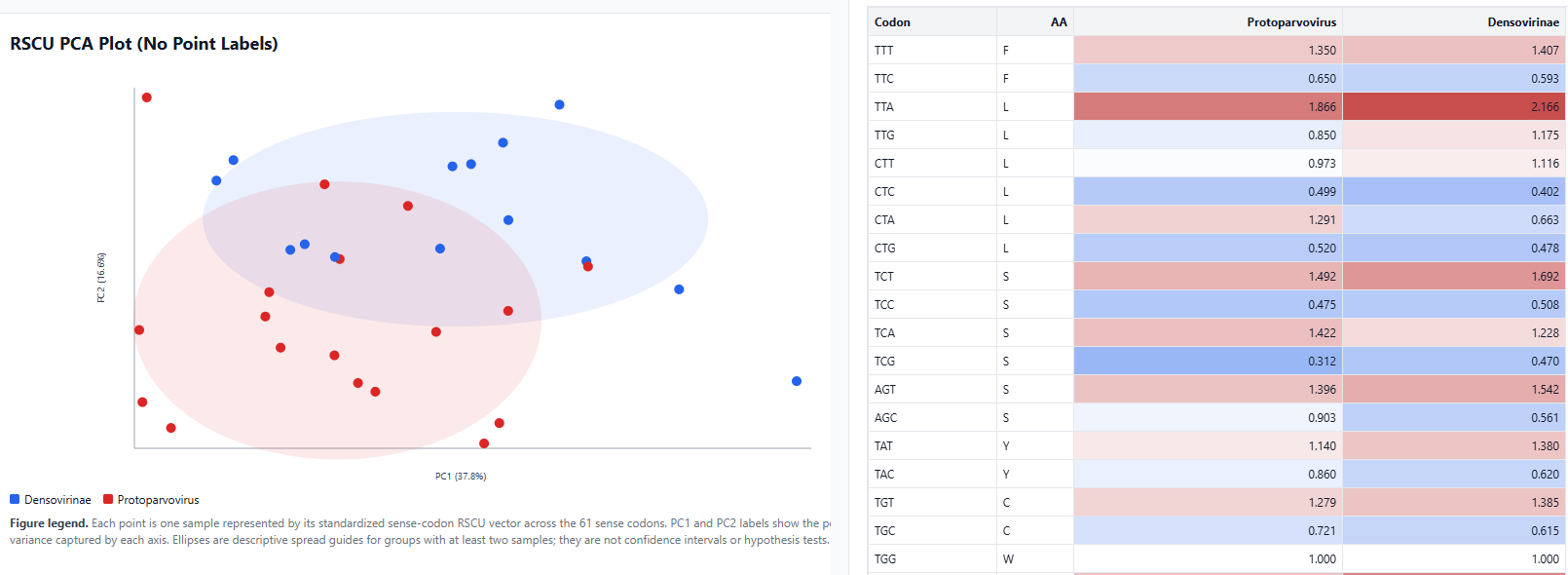
Take an exploratory first look at codon preference across groups of coding sequences. The report includes RSCU per codon, synonymous dinucleotide usage, codon-pair ratios, PCA, and GC and GC3 content, with tables in CSV and TSV.
// no local compute
We run the analyses for you
Workflows run on our servers, not on your computer. Pick your input, adjust a few options that come with sensible defaults, and click Run. The result is saved to your project when it is ready, together with the workflow and parameters that produced it. There is nothing to install, and you don't need a powerful machine.
// faq
Which markers does the amplicon workflow support?
16S and 18S rRNA, classified against SILVA, and ITS, classified against UNITE. The workflow is designed for paired-end short-read amplicon data.
Is the codon usage analysis a statistical test?
No. It is a descriptive, exploratory analysis of codon usage and composition. It does not perform significance testing.